
Ute Tray Headboard: What Is It & Do You Need One?
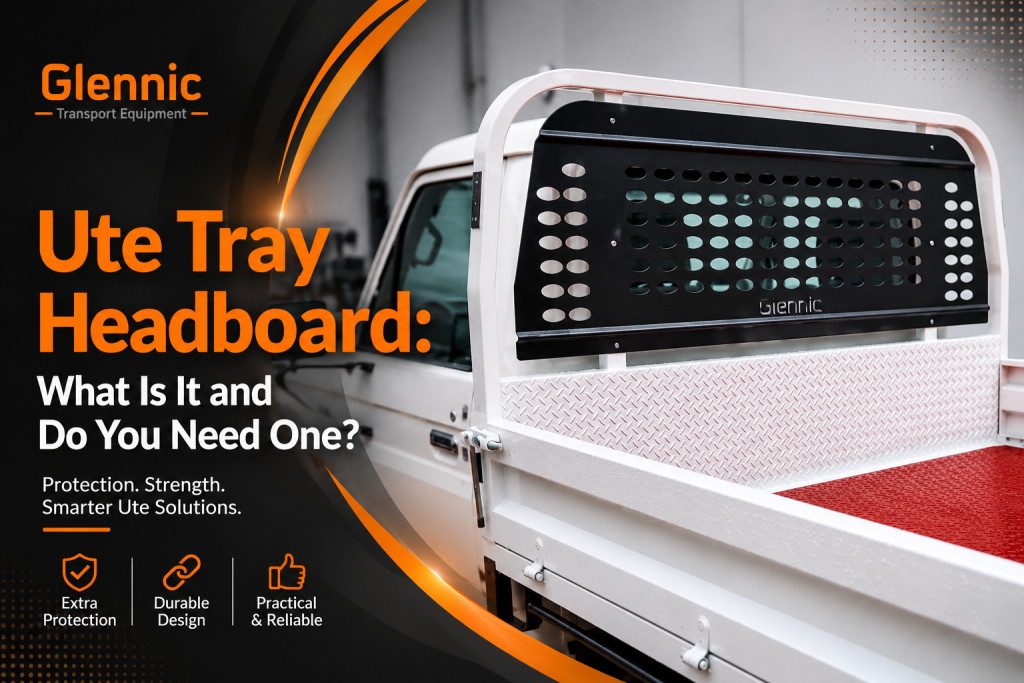
If you are setting up a ute tray for work, carrying equipment or everyday use, the headboard is one part worth considering before the tray is built. It sits directly behind the cab and creates a physical barrier at the front of the load area. Depending on its design and rating, it may also form part of a load-restraint setup.
But having a headboard does not automatically make a load secure. The right setup depends on what you carry, how the tray is designed, and how the load will be restrained.
Here is what a ute tray headboard does, the different options available, and what to consider when deciding whether you need one.
What Is a Ute Tray Headboard?
A ute tray headboard is the vertical structure positioned at the front of the tray, directly behind the vehicle’s cab. Depending on the tray design, it may be made from steel, aluminium, stainless steel, or other suitable materials.
Its exact purpose depends on how it has been designed. A headboard creates a physical boundary between the tray and cab and can provide a structure against which certain loads are positioned. When designed, rated and installed for the purpose, it may also contribute to forward load restraint.
It is important not to assume that every headboard can restrain every type of load. Its suitability depends on factors including its construction, strength, mounting and the cargo being transported.
What Are the Main Ute Tray Headboard Benefits?
The ute tray headboard benefits depend largely on the way the vehicle and tray are used. For work utes in particular, there are two practical reasons for including one in the tray design.
1. It Creates a Barrier at the Front of the Tray
A headboard provides a defined boundary between the load area and the rear of the vehicle cab.
This can be useful when a ute regularly carries tools, equipment or materials because the front of the tray is not completely open. The headboard can also be considered alongside other tray features when designing a work setup around the equipment normally carried.
2. It Can Form Part of a Load-Restraint Setup
A suitable headboard can contribute to forward load restraint when it has been designed and rated for that purpose.
This does not mean the headboard should be relied upon as the only form of restraint.
In Western Australia, drivers are responsible for ensuring loads carried on light vehicles are properly secured. Loads must not move or fall from the vehicle during normal driving or become loose and create a hazard. Appropriate restraints may include rated anchor points, tie-down straps, nets or other methods suited to the particular load.
Important: Do not assume that having a headboard means your load is secure. The restraint method still needs to be appropriate for the cargo and comply with applicable WA requirements.
Headboard vs Cab Protector: Are They the Same Thing?
Not necessarily. Although terms such as headboard, loading rack, hoop and cab protector are sometimes used when discussing the front section of a ute tray, they should not automatically be treated as the same component.
A headboard generally refers to the structure forming the front boundary of the tray. A cab protector is an additional feature intended to provide protection around the rear cab area. Their exact construction and purpose will depend on the particular tray design.
This distinction matters when choosing a headboard for a ute tray. Rather than selecting a component based on its name or appearance, consider what it has actually been designed to do and whether it suits your tray and intended use.
Common Ute Tray Headboard Types
There is no single headboard configuration that is right for every ute. Designs can vary according to the tray, vehicle, and intended application.
The following gives a general overview of ute tray headboard types you may come across.
Headboard setup | What it provides | Worth considering when |
Frame-style headboard | A straightforward structure at the front of the tray | You want a simple work-tray configuration |
Full-width headboard | A larger physical barrier across the front of the tray | Your tray setup benefits from greater forward coverage |
Headboard with hoop | Integrates the front tray structure with a hoop-style design | The tray is being configured as a complete work setup |
Custom headboard | Designed around a particular tray or equipment configuration | Standard configurations do not suit your intended use |
Material is another consideration. GTE Perth’s current hybrid tray range, for example, offers headboard configurations using marine-grade aluminium, 316 marine-grade stainless steel or high-strength galvanised steel.
Rather than choosing on material or appearance alone, consider the headboard as part of the complete tray design.
Is a Ute Tray Headboard a Safety Device?
A ute tray safety headboard can contribute to a load-restraint system when it is appropriately designed and rated, but the presence of a headboard alone does not mean cargo is properly secured.
Transport WA states that drivers are legally responsible for ensuring loads on light vehicles are secured so they do not move or fall during normal driving or become loose and create a hazard.
Transport WA also directs road users to the National Transport Commission’s Load Restraint Guide for load-securing guidance. The NTC notes that Western Australia uses the performance standards contained in the 2004 Load Restraint Guide.
For everyday ute use, the important point is simple: the load itself needs to be properly restrained for the journey. A headboard should only be treated as one part of that setup where appropriate.
Do You Need a Ute Tray Headboard?
Not every ute or load requires exactly the same tray setup. Whether a headboard makes sense depends on what the vehicle carries, how often the tray is used, and how the cargo will be secured.
This quick comparison can help identify what needs to be considered.
How you use your ute | What to consider |
Carry tools and equipment regularly | How equipment will be positioned and restrained |
Carry longer materials | Load dimensions, positioning and appropriate restraint |
Building a new work tray | Planning the headboard, storage and tie-down points together |
Carry occasional light loads | Whether the existing tray configuration already suits your needs |
Building a custom commercial setup | Designing the tray around the equipment normally carried |
If you are having a new tray built, it makes sense to discuss the headboard at the design stage rather than treating it as an isolated accessory later.
What Should You Consider When Adding a Headboard to a Custom Ute Tray?
Start with what you actually need the ute to carry.
The tray dimensions, headboard, tie-down locations, toolboxes, drawers, and other accessories should work together. A tray designed around its intended use is generally more practical than choosing individual components without considering the complete setup.
Before deciding on a headboard, consider:
- what you regularly carry
- the size and shape of those loads
- how the cargo will be restrained
- where suitable tie-down points are positioned
- whether you need toolboxes or under-tray storage
- whether other tray accessories could affect the configuration
- the material and construction appropriate for your intended use
For commercial vehicles, it is particularly useful to think about what the ute carries on a normal working day rather than only considering occasional loads.
Choosing a Ute Tray Headboard in Perth
If you are considering a ute tray headboard in Perth, the vehicle’s intended use should guide the setup.
A tradesperson carrying tools and materials throughout the week may have different requirements from someone who uses their ute mainly for general or recreational purposes. Tray dimensions, storage, tie-down locations, headboard construction and other accessories can all influence the final configuration.
Planning these elements together also gives you an opportunity to build the tray around the way the vehicle will actually be used.
GTE Perth designs and installs custom ute trays in Perth for different ute makes and models. Its current range includes single cab, extra cab, dual cab and hybrid tray configurations, with additional upgrades available depending on the setup.
What Headboard and Tray Options Does GTE Perth Offer?
GTE’s current tray range shows how headboard and front-tray configurations can vary depending on the tray being built.
For its single-cab trays, GTE currently lists a three-inch round roll hoop or RHS hoop as part of the standard specifications. Available upgrades include a cab protector and a certified ROPS-style tray.
GTE’s hybrid tray range uses a steel RHS roll hoop and provides three material choices for the dropsides, side rails and headboard:
- Marine-grade aluminium
- 316 marine-grade stainless steel
- High-strength galvanised steel
These options show why it is worth considering the headboard alongside the complete tray rather than choosing it purely as a standalone feature.
FAQs
What is a ute tray headboard?
A ute tray headboard is the vertical structure at the front of a tray, directly behind the vehicle cab. It creates a physical boundary for the load area and, when appropriately designed and rated, may form part of a load-restraint setup. Its design and construction can vary between different trays.
What does a headboard do on a ute tray?
A headboard separates the front of the tray from the cab area and provides a physical barrier at the front of the load space. Depending on its design and rating, it may also assist with forward load restraint. It should not, however, be considered a replacement for correctly securing the load.
Does a ute tray headboard stop cargo from moving?
Not on its own. Whether a headboard can contribute to restraining cargo depends on its construction, mounting, rating and the load being transported. Appropriate tie-downs, rated anchor points or other restraint methods may still be required to keep the load secure during normal driving.
Do I need a headboard on my ute tray?
That depends on your tray design, what you carry and how the load will be restrained. A headboard can provide a useful barrier at the front of a work tray, but the appropriate configuration should be considered as part of the overall tray and load-restraint setup.
Can a ute tray headboard be customised?
Headboard configurations can vary according to the tray and intended use. GTE Perth’s hybrid tray range, for example, currently provides headboard options in marine-grade aluminium, 316 marine-grade stainless steel and high-strength galvanised steel. Other tray features and upgrades can also be considered when planning the complete setup.