
Ute Tray Ladder Racks: Uses, Benefits and Buying Guide
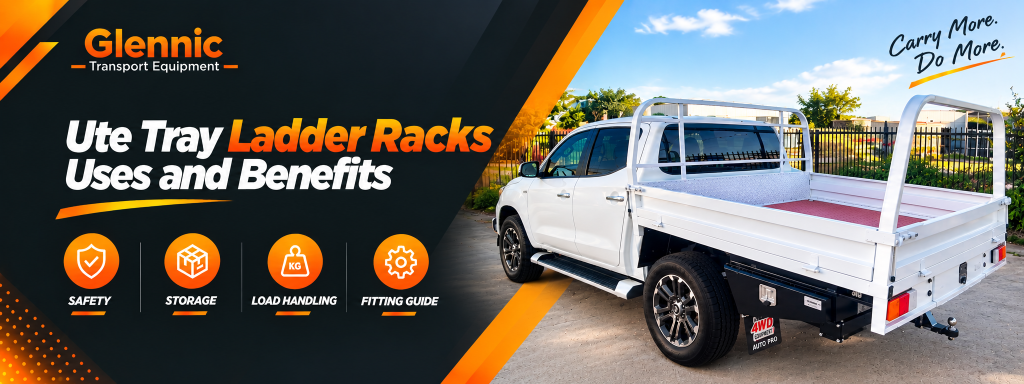
If you’ve ever driven behind a trade ute with a ladder bouncing off the tailgate, you already know why this upgrade exists. Australian tradies haul long, heavy, awkward gear every day, and a standard tray simply wasn’t built for it.
That’s where a ute tray ladder rack comes in. It’s an overhead frame that carries your long-length materials above the cab and tray, freeing up your cargo space below for tools and everyday site gear.
Letting ladders or pipes hang off the back of the tray isn’t just risky. It shifts weight behind the rear axle, blocks tray access, and can land you a fine under Australian load restraint rules. A properly fitted ladder rack for ute trays fixes all three problems at once.
This guide walks through what these racks actually do, why tradies rate them, and what to check before you buy one for your rig.
What Are Ute Tray Ladder Racks Used For?
A ute tray ladder rack is used to carry materials that are too long for the tray floor, things like ladders, pipe, and timber, on a raised frame above the cab and tray. It’s the most common accessory fitted to a work ute in trades that deal with anything longer than two metres.
Carrying Ladders and Long-Length Materials
The core job of a ladder rack is transporting oversized materials safely. Extension ladders, copper pipe, PVC conduit, steel channel, and full sheets of timber all fall into this category.
Plumbers, electricians, builders, and roofers rely on this daily. Resting long items across front and rear crossbars spreads the load evenly, so nothing flexes, bows, or slaps around in transit.
Keeping Tools and Materials Organised
A cluttered tray slows everyone down. Once ladders and pipe move overhead, your tray floor stays clear for toolboxes, generators, drawer systems, and loose site supplies.
This isn’t just tidiness. It’s faster loading, easier stocktaking, and less chance of a ute toolbox lid getting crushed under a stack of conduit.
Ute Tray Ladder Rack Benefits for Tradies
With a tray ladder rack, you get space, safety, and speed on site. Here’s how each one plays out in real conditions.
More Usable Tray Space
Elevating long gear effectively doubles what your tray can carry. You can run 4 to 6 metre lengths overhead while keeping the floor open for a fridge slide, drawer unit, or trade equipment.
For a lot of tradies, this removes the need to tow a trailer for routine service calls, which saves fuel, time, and parking headaches on tight suburban jobs.
Easier Transport of Long and Awkward Loads
Long loads without overhead support end up resting on the tailgate or tray edge. That creates an unstable rear-axle load and a dangerous overhang.
A rack spreads weight across the tray frame or chassis mounting points instead, which keeps your load capacity balanced and your vehicle predictable on the highway or on corrugated country tracks.
Better Organisation and Accessibility
Good racks are built for speed, not just storage. Features like ladder pins, fold-down ears, and rear loading rollers let you strap or unclip a single ladder without disturbing anything else.
That’s real time saved, multiple times a day, across every job.
A More Purpose-Built Work Vehicle
A rack finished in polished alloy, black powder-coat, or stainless steel does more than tidy up your ute. It signals to clients and site supervisors that your rig, and your business, is organised and professional.
What to Consider When Choosing a Ladder Rack for Your Ute
The right ladder rack depends on your tray type, your typical payload, and where you drive. Get these six factors wrong, and you’ll either underload your rack or damage your vehicle.
Ute, Tray and Rack Compatibility
Not every rack fits every tray. Compatibility comes down to your body style:
- Drop-side trays generally use removable racks that drop into floor pods or corner post sockets.
- Tub-mounted setups need racks that fix to internal tub rails or top corner brackets.
- Canopies and roller shutters require track-mounted crossbars or internal arch supports, since you can’t mount straight onto the shutter mechanism.
Crossbars also need to be contoured to your cab’s exact height and profile, or you’ll get rattling and uneven load contact.
Load Capacity and the Materials You Carry
Every rack has a load rating, and going over it is both a safety risk and a compliance issue under the National Transport Commission’s Load Restraint Guide. Two ratings matter here:
| Rating type | What it means | Typical figure |
| Dynamic load | Safe weight while the vehicle is moving on sealed roads | 120kg to 150kg per pair (heavy-duty trade racks) |
| Static load | Safe weight while the vehicle is stationary | Up to 3x the dynamic figure |
| Off-road adjustment | Reduction for unsealed roads and corrugations | Roughly 30% lower than sealed-road rating |
Always weigh the rack itself, plus brackets and cargo, against your vehicle’s GVM. Overloading a removable ladder rack on gravel roads is one of the most common (and preventable) mistakes tradies make.
Material, Strength and Durability
Three materials dominate the market, each suited to different conditions:
- Aluminium ladder rack (63mm or 76mm tube): lightweight, rust-resistant, protects your payload capacity.
- Steel ladder rack (40×40 box tube or 76mm pipe): heavy-duty strength, available galvanised or powder-coated.
- Stainless steel (T304): best corrosion resistance, ideal for coastal or marine work.
Height, Width and Clearance
Your rack needs to clear the cab without turning into a wind-catching liability. Crossbars sitting too low risk ladders flexing onto the roof. Racks sitting too high add drag, burn more fuel, and can clip low car parks and garages.
Australian standards cap total vehicle width, including the load, at 2.5 metres, with side extensions limited to 150mm past the vehicle body, as outlined in the NHVR’s general vehicle dimension limits.
Mounting, Access and Load Restraint
Load restraint isn’t optional. Look for racks with welded rope hooks, ratchet strap anchor points, ladder clamps, and lockable holders for conduit.
Under Australian regulations, loads can extend up to 1.2 metres past the front or rear without extra marking. Beyond that, a warning flag and, at night, a red light become mandatory.
WA’s load restraint rules require that any load carried on a light vehicle be secured so it doesn’t move, fall, or become loose during normal driving conditions, and similar overhang limits apply nationally, where loads sticking out more than 1.2 metres behind a vehicle need a brightly coloured flag at least 300mm by 300mm, plus a red light at night.
Compatibility With Your Existing Ute Setup
Your rack has to work with what’s already on the vehicle. Check that crossbar heights line up with your headboard, cab roof racks, or nudge bar H-racks.
If you’re running under-tray toolboxes, a ute canopy, or a tonneau cover, confirm the mounting brackets won’t foul the doors, locks, or shutter mechanism.
Is a Ute Tray Ladder Rack Right for Your Work Ute?
If you’re regularly carrying anything over two metres long, a ute ladder rack is one of the highest-value upgrades you can make. It protects your vehicle, doubles your usable tray space, keeps tools organised, and keeps you compliant on the road.
Whether you’re running suburban jobs or heading out to regional WA sites, the right rack means your ute is always ready to load and go.
Get a Ute Tray Ladder Rack Built Around Your Setup with GTE
At Glennic Transport Equipment, we build and fit ladder racks for tradies across Perth and WA who need their trayback ute working as hard as they do. We know the difference between a rack that just bolts on and one that’s actually matched to your tray, your canopy, and the loads you carry every day.
Our rear ladder rack starts from around $440, fitted to suit your existing setup. If you’re also reviewing your tray itself, our range of ute trays is worth a look before you commit to a rack, since tray type decides which mounting system will actually fit.
Get in touch with our team for a fit that’s built around your ute, not a generic one-size-fits-all frame.
FAQs
Do I need a permit to fit a ladder rack to my ute in WA?
No, standard aftermarket ladder racks don’t need a permit in WA as long as the finished vehicle stays within legal width, height, and overhang limits. A permit only becomes relevant if you’re carrying loads that push beyond standard oversize thresholds, which is rare for everyday trade ladders and pipe.
Can I fit a ladder rack to a ute that already has a canopy or roller shutter?
Yes, but the mounting method changes. Canopy and roller shutter setups generally need track-mounted crossbars or internal arch supports rather than tray-mounted posts, since bolting directly onto a shutter can jam the mechanism or void its warranty.
How much weight can a ute ladder rack actually carry?
Most heavy-duty trade racks carry 120kg to 150kg dynamically (while driving on sealed roads), with static capacity up to three times higher when parked. That figure drops by roughly 30% on unsealed or corrugated roads, so always load for the more conservative rating if you’re heading off-highway.
Does adding a ladder rack affect my ute’s GVM or fuel economy?
A ladder rack itself is light, but its weight still counts toward your GVM once loaded with ladders, pipe, or timber. Fuel economy takes a small hit from wind resistance, more noticeable at highway speed, but it’s minor compared to towing a trailer for the same materials.
Can I install a ute ladder rack myself, or does it need a professional fit?
Basic bolt-on kits can be a DIY job if you’re comfortable with tray mounting points, but getting crossbar height, tray compatibility, and load rating right is easy to get wrong. A professional fit ensures the rack sits correctly with your canopy, toolbox, and headboard, and that your restraint points actually meet load rating requirements.