
Complete Guide to Ute Tray Measurements & Sizes
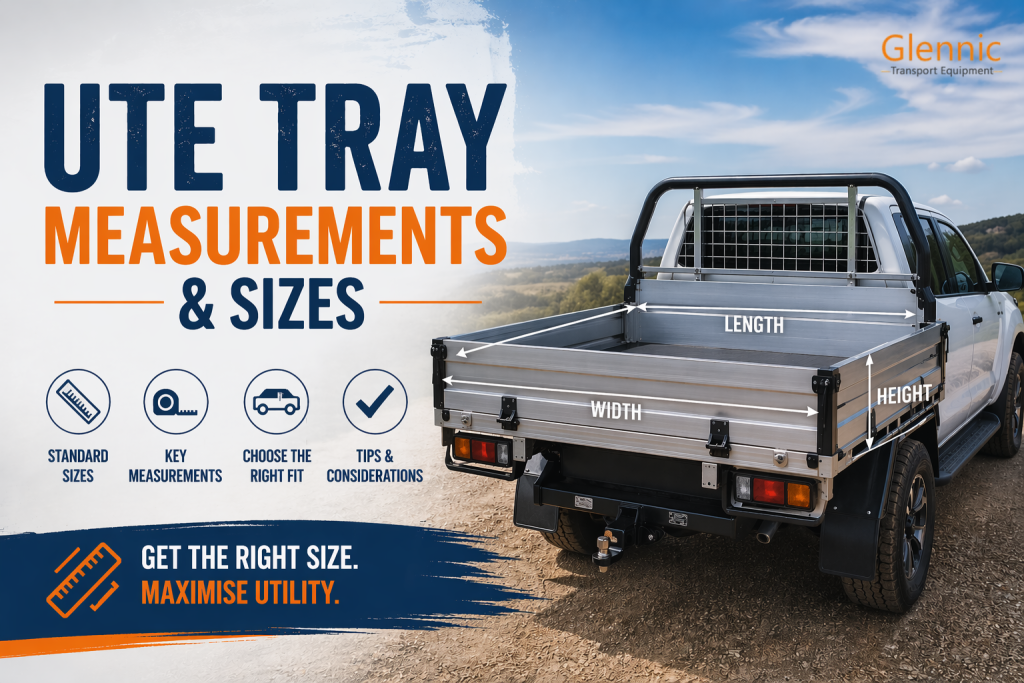
It’s not only the length that matters when it comes to a ute tray measurement, as you also have to consider the width and depth and especially the gap between the wheel arches.
In Australia, most of the dual-cab trays are about 1500–1575mm long, 1500–1650mm wide, and about 480–570mm deep. But that doesn’t mean they’ll fit what you need. So in this guide, we will explain how you can measure your own tray properly before you buy anything. Moreover, we will have a look at popular ute models and their tray dimensions.
From there, we will go through different tray setups for trade work, touring, and everyday use, plus a few simple customising tips to help you get the right ute tray for your vehicle. So, let’s begin.
Importance of Ute Tray Measurements
Ute tray measurements matter so much because two utes can look similar from the outside but still have very different tray dimensions, wheel-arch gaps, and usable load space.
A ute tray is not just a flat space. It is the base for the whole setup. So if you want a canopy, drawer system, toolbox, or under-tray storage, the measurements need to line up accordingly. Consider you are a tradie, and you load your ute with conduit, tools, and a couple of storage boxes every morning. The ute looks fine until you try to place a box between the arches and realise it sits crooked. To avoid such a kind of problem, good planning is a must.
What is the Standard Size of Ute Trays in Australia
There is no single standard ute tray size in Australia; tray size changes with cab type, wheelbase, chassis design, and whether the ute uses a factory tub or an aftermarket tray. However, a common dual-cab range is around:
- Length: 1500mm to 1575mm
- Width: 1500mm to 1650mm
- Depth: 480mm to 570mm
- Between arches: 1085mm to 1225mm
Average Ute Tray Dimensions by Cab Type
If you are carrying long items all the time, a single cab or cab-chassis setup will suit you. If you need the ute for family use or work use, a dual-cab ute can be the better fit for you. It depends on how you actually live with the vehicle, not just how it looks in the driveway. Let’s have a look at the dimensions by cab type.
Single Cab Ute Tray
Single-cab utes usually give you the most tray space. Length between 1800 mm and 2400 mm, or more; width between 1700 mm and 1900 mm.
Extra Cab Ute Tray
Extra cab setups sit in the middle. They give you more cabin space than a single cab, but you still keep more tray room than most dual cabs. Length between 1600 mm and 1800 mm, Width between 1600 mm and 1800 mm
Dual Cab Ute Tray
Dual cabs are the most common choice for many Australian buyers because they are flexible. You can carry passengers, then still use the back for gear. Length between 1500 mm and 1575 mm, Width between 1500 mm and 1650 mm
Hybrid Ute Tray
Hybrid trays are a new-generation solution designed to be lighter, stronger, and more durable for long-term use. They combine advanced materials to deliver excellent performance in demanding conditions. Length between 1800 mm and 1950 mm, Width between 1800 mm and 1950 mm
Top Ute Models and Their Tray Sizes: A Complete Comparison
Utes look the same, but their tray dimensions vary. For example, the Ford Ranger, Toyota HiLux, Volkswagen Amarok, Isuzu D-MAX, Mazda BT-50, and other popular models all land in different places once you look closely at the numbers.
Comparison table of tub dimensions by ute model
Ute model | Length (mm) | Width (mm) | Between arches (mm) | Depth (mm) |
Toyota HiLux | 1570 | 1645 | 1105 | 481 |
Ford Ranger | 1547 | 1584 | 1224 | 529 |
Mitsubishi Triton | 1570 | 1470 | 1085 | 475 |
Isuzu D-MAX | 1570 | 1530 | 1122 | 490 |
Mazda BT-50 | 1571 | 1530 | 1120 | 490 |
Nissan Navara | 1509 | 1560 | 1134 | 519 |
GWM Cannon | 1561 | 1614 | 1146 | 563 |
LDV T60 | 1525 | 1510 | 1131 | 530 |
Volkswagen Amarok | 1555 | 1620 | 1222 | 508 |
KGM Musso | 1300 | 1570 | 1140 | 570 |
Disclaimer: The dimensions listed above are approximate and may vary depending on the model year, variant, and trim level. Always confirm exact measurements with the manufacturer or supplier before making any purchase or fitment decision.
Ute Trays by Industry: Choosing the Right Setup for Your Work
A ute tray serves as a practical work area, a secure storage solution, or even a mobile hub for running a business. Across different industries, tray configurations are designed to meet specific operational needs.
Agriculture & Farming Operations
Farmers need space for fencing gear, feed, water containers, tools, and weatherproof storage. So the tray of your ute must be designed for durability, organisation, and the ability to handle heavy-duty rural work in all conditions.
Mining & Industrial Operations
For mining or industrial use, the tray needs to be tougher and more compliant, like a steel ute tray. That means heavy-duty steel, stronger mounts, safety markings, and extra storage for site gear. The tray is not just for carrying things, but it becomes part of the work system.
Construction & Skilled Trades
For tradies, a ute tray is basically a mobile workbench. You need room for tools, site gear, materials, and storage boxes. Lockable drawers, ladder racks, tie-down points, and easy access all matter.
Recreation & Tourism Activities
Touring setups focus on storage and self-sufficiency. Being a tourist, you will need fridge slides, drawers, water tanks, solar, recovery gear, and canopy integration. So you will need a good tray that gives you a clean base to support a complete touring setup.
Guide to Measuring Your Ute Tray
Here is a step-by-step guide to measure your ute tray:
- Measure the length: Measure from the inside front wall to the inside edge of the rear area you actually use, and do not guess from the outside shape.
- Measure the width: Measure the full internal width, then check the narrowest part as well. After doing this, you will know what sits flat and what does not.
- Measure the depth: Depth is the height from the floor of the tray to the top edge of the sidewall. This affects how much you can stack and how easy it is to reach in.
- Measure the wheel-arch gap: This is one of the most important numbers on the whole ute. If the gap is too tight, a pallet or box system will not sit properly.
- Check the fit points: last but not least. Look at the mounting holes, rails, tie-downs, tailgate area, and any shape changes in the tray floor.
Custom Tray Solutions: Built for Your Needs
If your work involves specialised needs or your lifestyle calls for greater versatility, a custom-built tray setup can be the ideal option.
Material: Aluminium or steel?
Aluminium is lighter and helps reduce weight. Steel is heavier but stronger and better for rough work. So you can choose aluminium trays if you want to keep the weight lighter, and steel trays for toughness and heavy-duty use.
Canopies and storage
If you are adding a canopy, the tray needs to suit it. Same for drawers, fridge slides, roof racks, and under-tray boxes. Such essential tools enhance the functionality of utes.
A custom tray setup works best when the measurements are done properly from the start. Tray and canopy builders also often offer set lengths for dual cabs, such as 1600mm, 1800mm, and sometimes 2000mm, depending on cab style.
Upgrade Your Ute Tray with a Custom Solution from Glennic Transport Equipment
At Glennic Transport Equipment, we design strong and practical ute tray setups that suit tradies, tourers, and hard-working vehicles across Perth. Whether you drive a Toyota Hilux, Ford Ranger, Isuzu D-Max, Mitsubishi Triton, Navara, or any 4×4 touring vehicle, our team can design and build a custom ute tray tailored to your specific needs.
Explore our range of ute trays
Get a Quote
Frequently Asked Questions
What is the standard ute tray size in Australia?
There is no single standard size. Most dual-cab trays sit around the common range listed earlier, but exact dimensions change by model and variant.
What is the most important measurement?
For many buyers, the gap between the wheel arches is the big one. That is what decides whether a pallet, drawer system, or storage box fits properly or not.
Is a tray better than a tub?
It depends on how you use the ute. A tray usually gives you more flexibility, easier access, and better canopy options. A tub can still work fine for simpler use.
How do I know if a canopy will fit?
Measure the tray length, width, depth, and mounting points first. Then match the canopy to the exact vehicle and tray style.
Can all utes carry a pallet?
No. Some can, some cannot. It depends on the arch gap and usable width. That is why it is important to compare model dimensions.