
Custom Steel Ute Trays in Perth Complete Guide to Choosing the Right Tray
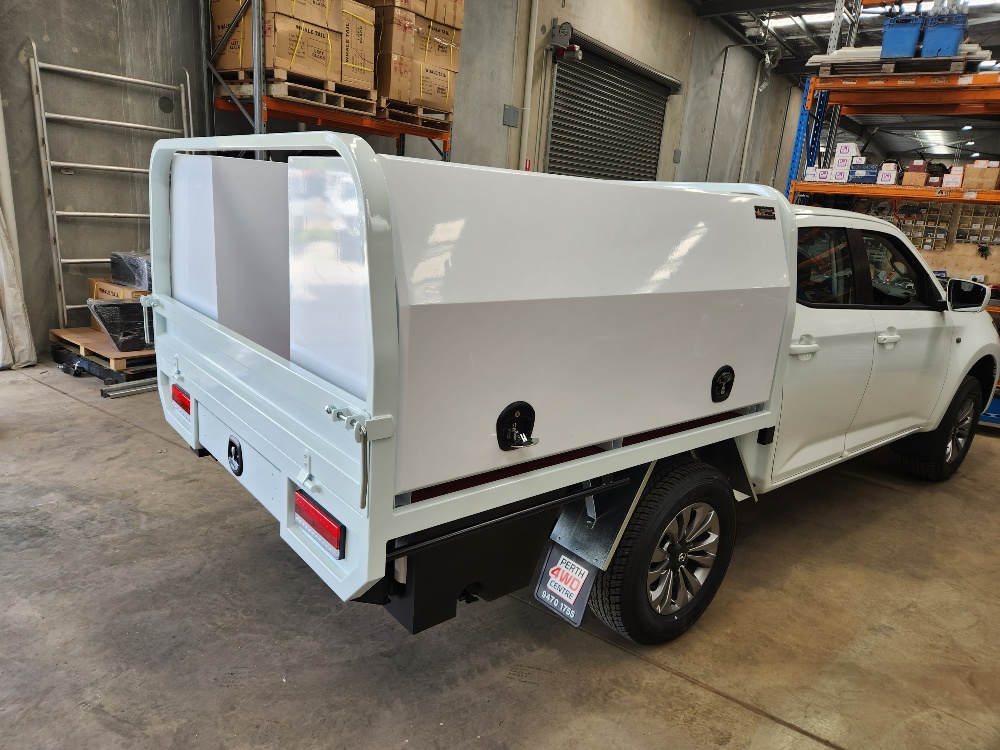
Custom steel ute trays are purpose-built replacements for a factory tub, engineered from heavy-duty, load-rated steel to carry heavier loads, withstand demanding conditions, and last longer. If your ute is doing real work every day, a factory tub was never designed to keep up.
This guide explains what actually goes into a quality steel tray, how it compares with aluminium, what it costs, and exactly what to check before you commit, so you end up with a tray built around your job, not just a catalogue option.
Key Takeaways
- A custom steel ute tray is stronger than a factory tub; built around your trade, vehicle, and daily workload, making your ute safer, more organised, and more productive.
- The quality of a steel ute tray comes down to what’s underneath. A heavy-duty RHS chassis, thick chequer plate flooring, quality welds, and ADR-compliant fabrication matter far more than appearance alone.
- Choosing the wrong tray can reduce your legal payload and limit future upgrades.
- Always consider your GVM, cab configuration, and planned accessories before ordering.
- Steel and aluminium trays each have advantages, but steel remains the preferred choice for Perth tradies who regularly carry heavy tools, machinery, construction materials, or equipment.
- Buying from an experienced Perth Ute tray manufacturer means your tray is designed for local conditions, professionally installed, and supported long after it’s fitted.
What Are Custom Steel Ute Trays?
A custom steel ute tray is a heavy-duty aftermarket tray, welded from load-rated steel and built to your Ute’s exact chassis dimensions, rather than a generic bolt-on replacement.
Most quality builds use a welded RHS (rectangular hollow section) chassis frame, around 75mm x 50mm and 3mm thick, paired with a chequer plate floor between 2mm and 3mm.
That combination is what gives a tray its load-bearing strength and stops it flexing underweight over time. A well-built tray is also ADR-compliant, meaning it meets the structural and safety standards required for registration in WA, not just something welded up in a shed.
That’s the technical baseline. Here’s why it matters compared to what came on your ute from the factory.
Why Choose a Custom Steel Tray Over a Factory Tub?
Factory tubs are designed to suit the average buyer, which means they rarely suit anyone doing serious trade or off-road work.
Here’s how these two compare in practice:
Factory Tub | Custom Steel Ute Tray |
Fixed dimensions, shaped around the cab, not the load | Built to your exact vehicle and job requirements |
Enclosed sides make loading awkward | Drop sides give full access from either side |
Little room for aftermarket fit-outs | Designed from the start for toolboxes, canopies, racks |
One-piece construction, costly to repair if damaged | Modular, individual panels can be replaced |
Rated for general use, not sustained heavy loads | Built to handle daily heavy-duty loading |
For tradies loading and unloading multiple times a day, the access difference alone is significant. But the bigger factor long-term is what the tray is made from, and that’s where steel and aluminium genuinely diverge.
Steel vs Aluminium Ute Trays: Which One Is Right for You?
Steel ute trays are stronger and more impact-resistant, while aluminium trays are significantly lighter, meaning the right choice depends on what you’re carrying and how you’re using it.
A dual cab steel tray typically weighs in the range of 220 to 250kg, compared to roughly 115 to 130kg for an equivalent aluminium tray, a difference of well over 100kg. That extra weight comes straight off your legal payload, which matters if your ute already sits close to its GVM once tools, fuel, and passengers are accounted for. In return, steel resists denting and structural fatigue far better under sharp, heavy, or carelessly loaded materials like steel props, rock, or machinery.
Independent comparisons put steel at up to three to four times stiffer than aluminium under repeated impact, which is the main reason it remains the default choice for builders, landscapers, and mining contractors.
Factor | Steel Tray | Aluminium Tray |
Weight (dual cab) | 220 to 250kg | 115 to 130kg |
Impact resistance | Higher, resists denting under sharp loads | Good, but more prone to denting |
Corrosion resistance | Requires coating (powder coat or galvanising) | Naturally corrosion-resistant |
Indicative cost | Lower upfront | 20 to 30% High |
Best suited for | Builders, landscapers, mining, agriculture | Fleet vehicles, coastal work, weight-sensitive setups |
If your ute is regularly carrying jagged materials or gets loaded roughly rather than placed carefully, steel is the safer long-term option. If you’re already close to your GVM or working near the coast where salt air accelerates corrosion, aluminium is worth serious consideration too.
Once you’ve settled on material, the next decision is matching the tray to your specific vehicle and workload.
How to Choose the Right Custom Steel Ute Tray
Choosing the right tray involves more than selecting the correct size. Your vehicle, the type of work you do, and any future accessories all play a role in finding the best long-term solution.
Choose the Right Tray for Your Vehicle
Cab configuration affects tray length, mounting points, and weight distribution, so this is where sizing starts. Single cab, extra cab, and dual cab utes each need a different tray footprint.
- Dual cab: 1870 mm (L) x 1870 mm (W)
- Extra cab: 2100 mm (L) x 1870 mm (W)
- Single cab: 2400 mm (L) x 1870 mm (W)
It’s also worth knowing your Ute’s numbers before you order. GVM and payload vary significantly across popular Perth models:
Model | Approx. GVM | Approx. Payload (base spec) |
Toyota Hilux SR5+ | 3,050kg | 940kg |
Ford Ranger XLT | 3,200kg | 900 to 1,000kg |
Mitsubishi Triton GLS | 2,900kg | 1,000 to 1,075kg |
Isuzu D-Max | 2,950kg | 950 to 1,000kg |
A steel tray, plus a toolbox, canopy, or drawers, can easily account for 150 to 300kg once fitted. Knowing your payload margin before you order stops you finding out the hard way at a weighbridge.
Think About Your Daily Work
Different trades load a tray differently, and the tray should be built around that.
- Builders and landscapers need higher load capacity and reinforced tie-down points for bulky, heavy materials.
- Electricians and plumbers benefit more from compartmentalised toolbox space than raw deck area.
- Mining and agricultural users need reinforced flooring for rougher, heavier loads.
- Delivery fleets prioritise fast, repeated access over storage volume.
Plan for Future Upgrades
Even if you don’t need every accessory on day one, it’s far cheaper to build for them upfront. Toolboxes, canopies, ladder racks, water tanks, drawers, LED work lights, and side protectors are all easier and cheaper to fit to a tray designed to support them, rather than retrofitted later.
With the vehicle and workload sorted, here’s what should actually be under the surface of the tray you choose.
Steel Ute Tray Build: Key Components That Matter
Not all steel ute trays are built to the same standard. Understanding the key components of a quality tray will help you compare options confidently and recognise the difference between a premium build and a budget alternative.
Heavy-Duty Steel Tray Base
A 3mm RHS chassis frame is the current industry standard for load-bearing strength, giving the tray the rigidity to resist flexing under repeated heavy use.
Headboard (Cab Protector)
Usually a mandrel-bent tube frame, the headboard shields the cab from shifting loads and doubles as an anchor point for long materials like timber or conduit.
Drop Sides and Tailgate
Drop sides let you load and unload from either side without walking the load around the vehicle, a genuine time saver when working solo.
Under-Tray Toolboxes
Built-in toolboxes keep tools dry, secure, and off the deck, freeing up usable load space without adding a separate storage unit.
Ladder Racks and Load Bars
Rated racks let you carry ladders, pipe, or timber above the tray, keeping long materials secure without eating into deck space.
Tie-Down Rails and Anchor Points
Proper anchor points, rated for the loads they’re carrying, are what actually keep cargo secure in transit and reduce road-related damage.
Protective Finish
A 2mm to 3mm chequer plate floor is typically powder coated or hot-dip galvanised, which matters more in Perth than most places given the combination of intense UV, coastal salt air, and red dirt abrasion.
Optional Accessories
Canopies, drawers, water tanks, LED lighting, side protectors, and canopy racks all build on the base tray once the core structure is right.
Common Mistakes to Avoid When Buying Custom Ute Trays
- Choosing on price alone. A cheaper tray means thinner chequer plate, lighter RHS, or unrated welds that fail early under load.
- Getting the size wrong. Undersized trays limit what you can carry; oversized ones waste payload and can affect handling.
- Ignoring payload limits. A steel tray plus accessories can use 150 to 300kg of your GVM before you’ve loaded anything, which is an easy way to end up illegally overloaded.
- Skipping future accessories. Retrofitting toolboxes or racks onto a tray not designed for them usually costs more than building them in from the start.
- Accepting poor fabrication. Cracked welds, rust bleeding through paint, or panel misalignment within a year or two are signs of rushed or low-grade work.
- DIY or unqualified installation. Incorrect fitting can affect both roadworthiness and any warranty on the tray itself.
Most of these issues trace back to one decision: who actually builds and fits the tray.
Why Perth Tradies Choose Locally Manufactured Steel Ute Trays
Locally manufactured trays are engineered for WA conditions specifically, from coastal salt corrosion to summer heat that can push metal surface temperatures well past 60 degrees, with faster turnaround and easier after-sales support than imported alternatives.
At Glennic Transport Equipment, that’s the standard we’ve built our name on. With 30+ years of experience designing and fabricating trays from our Maddington workshop, we build ADR-compliant steel trays to fit all makes and models, then install them properly by people who understand what Perth work vehicles are actually up against.
Still have questions before you commit? Here are the ones we get asked most.
FAQs
Are custom steel ute trays worth it in Perth?
Yes, for anyone regularly carrying tools, machinery, or building materials. A custom steel tray offers greater load capacity, durability, and storage flexibility than a factory tub. A worthwhile investment for trade and 4WD use.
How much does a custom steel ute tray cost in Perth?
A custom steel ute tray in Perth generally costs between $3,000 and $10,000+ installed. Prices vary depending on cab configuration, steel spec, and accessories.
Are steel ute trays stronger than aluminium trays?
Steel trays offer greater impact resistance and stiffness than aluminium, particularly under sharp or heavy loads, though aluminium is lighter and naturally more corrosion-resistant.
Can I install a canopy on my steel ute tray later?
Yes, most steel trays are designed to support a canopy as a later addition, though it’s best to flag this at the build stage so mounting points are positioned correctly from the start.
Do custom steel ute trays fit every ute model?
Reputable manufacturers build to suit specific makes and models, including the Hilux, Ranger, Triton, D-Max, LandCruiser, BT-50, and Amarok, so the tray fits precisely rather than needing modification.
How long does a steel ute tray last?
With proper coating (powder coat or galvanising), regular maintenance, and quality fabrication, a well-built steel tray commonly lasts well over a decade, even under daily heavy-duty use.
Still hauling gear in a tub that was never built for the job?
Upgrade Your Vehicle with a Custom Steel Ute Tray Built for WA Conditions
A tray engineered for your vehicle, your trade, and Perth’s conditions pays for itself in fewer repairs, better organisation, and a ute that finally works as hard as you do. Glennic Transport Equipment has spent over 30 years building exactly that, from our Maddington workshop to your driveway.
Explore our custom steel ute trays